



Walk into most schools today and you’ll see screens everywhere. Classrooms, lecture halls, hallways, even common areas. Video has become part of how schools communicate and teach.
The problem is that a lot of systems weren’t built for that scale. Traditional setups struggle once you try to connect multiple buildings or share content across campus. Wiring gets messy, upgrades get expensive, and switching between sources isn’t always straightforward.
This is where an AV over IP system starts to make more sense. It uses the network schools already have, making it easier to distribute video without rebuilding everything from scratch.
What Is AV Over IP in an Educational Setting?
At a basic level, AV over IP means sending video, audio, and control signals through a standard network instead of dedicated AV cables. Simply put, instead of using HDMI cables, you use Ethernet.
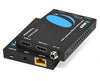
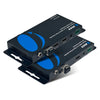
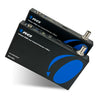
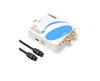
The setup usually involves an AV over IP encoder/decoder pair. The encoder takes a source and converts it into data that can travel over IP. The decoder receives that data and sends it to a display.
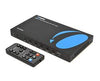
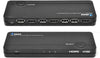
Compared to traditional HDMI matrix systems, this approach is more flexible. Schools can use existing infrastructure instead of building separate AV pathways. OREI’s ToVi systems follow this model, making it easier to deploy across classrooms and larger campus environments.
Common Challenges Schools Face with Traditional AV Systems
Multi-building or growing campuses using traditional AV systems may eventually encounter these issues:
-
Limited distance support: HDMI signals weaken over long distances
-
Scaling becomes expensive: Expanding matrix systems requires additional hardware
-
Harder content management: Managing multiple sources across classrooms becomes harder over time
-
Limited control: Without a proper AV control system, switching content can be slow and inconsistent
-
Maintenance challenges: Troubleshooting gets harder when equipment is spread across campus
All of this adds up, which is why many schools eventually start looking for something more scalable.
How AV Over IP Enables Campus-Wide Video Distribution

An AV over IP system is that scalable solution. A typical school setup starts with a media source, an ethernet system, and a decoder, which can be inside a classroom, hallway, or cafeteria.
Because it runs on standard HDMI over Ethernet, this AV system can handle both one-to-many and many-to-many distribution. For instance, you can send one video/message to many displays, or send unique content per classroom.
OREI ToVi systems are designed around this setup, making it easy to distribute video across your entire campus.
Key Benefits for Schools and Universities
One of the biggest advantages you get when switching to AV over IP is scalability. Start small, add more endpoints later. That flexibility matters, especially for growing campuses.
Routing is also more flexible because any source can be sent to any display. This works well for both classroom AV setups and campus-wide communication.
Centralized management is another improvement. Instead of handling devices individually, everything can be controlled from one place using an AV control system.
There’s also a cost benefit over time. While setup may require planning, using existing network infrastructure reduces the need for dedicated cabling. Performance stays consistent too, with support for HD and 4K video and low latency across the system.
Choosing the Right AV Distribution Solution for Your School
It’s worth noting that not every school needs the same setup. Simpler solutions may still work for smaller schools, but larger campuses need better. And factors like distance, display count, and control requirements matter, especially when dealing with multiple buildings.
See the table below for an easy way to match the right solution to your needs.
| Feature / Factor | HDMI Splitter | HDMI Matrix Switch | Matrix Extender (HDMI over CAT6) | AV Over IP System |
|---|---|---|---|---|
| Best For | Single classroom | Small labs / rooms | Medium schools / multiple rooms | Large campuses / multi-building setups |
| Content Control | Same content only | Multiple sources to multiple displays | Multiple sources to multiple displays | Fully flexible (any source to any screen) |
| Distance Support | Short (≤15–20 meters) | Short (rack-based setup) | Long (up to ~101 meters or more) | Very long (across buildings via network) |
| Scalability | Very limited | Limited by ports | Moderate | Highly scalable (add endpoints easily) |
| Cable Type | HDMI | HDMI | CAT6 / Ethernet | Network switches + CAT6 |
| Centralized Control | No | Limited | Limited | Yes (web GUI / control hub) |
| Multi-Building Support | No | No | Limited | Yes |
| Independent Classroom Content | No | Yes | Yes | Yes |
| Installation Complexity | Very simple | Moderate | Moderate | Advanced (IT/network integration) |
| Cost Level | Low | Moderate | Moderate | Higher upfront, lower long-term cost |
| Ideal Use Case | Same lesson on multiple screens | Small AV labs | Department-level distribution | Campus-wide video distribution |
| Example OREI Solution Type | HDMI Splitters | HDMI Matrix Switches | Matrix Extenders | AV Over IP (ToVi Systems) |
Real-World Use Cases in Education

There are a lot of ways you can use video over IP solutions. A great example of this are campus-wide announcements; hallways and common areas can have digital signage solutions for school updates.
Live lectures can also be shared across classrooms. And auditoriums can extend into overflow rooms.
All of this becomes simpler when video can move freely across the network instead of being tied to one location.
Centralized Control and IT Integration
Modern schools rely heavily on IT, and AV systems fit easily into that environment since it works with existing networks.
Many systems now also include web-based interfaces, meaning administrators can monitor and control everything remotely. Network features like VLAN segmentation also help manage traffic and keep things secure.
OREI systems support browser-based management, making it easier to integrate it into your existing workflows without adding unnecessary burden.
When Schools Should Choose AV Over IP
An AV over IP system makes sense in larger or growing environments, especially multi-building campuses where video needs to move between locations. It also works well for schools adopting hybrid learning or planning future expansion.
Systems that allow flexible routing are easier to adapt when needed. If your setup feels limited or difficult to manage, moving to an HDMI over IP network is the practical next step.
Building a Connected Campus
Schools are moving away from fixed AV setups and toward more flexible, network-based systems that make video easier to manage, distribute, and scale across classrooms and campuses.
With OREI’s ToVi AV Over IP solutions, schools can build a connected campus with centralized control, flexible content distribution, and easier future expansion — without the limitations of traditional AV infrastructure.
Click Here to Get Free Design Assistance →
• Response within 24–48 hours
• Full schematic & BOM included
• Guidance from AV engineers
• No obligation consultation