












Traditional AV systems have been around for a long time, and for good reason. They were reliable, predictable, and easy to understand. Run an HDMI cable from point A to point B, add a matrix switch if needed, and the job was done. That approach worked well when displays stayed put and layouts rarely changed.
Today, that reality looks very different. Offices move. Spaces get repurposed. Screens multiply. That shift is why many organizations are moving toward AV over IP solutions. Instead of locking audio and video into fixed hardware paths, AV over IP uses the network that’s already there and turns AV into something flexible, scalable, and easier to manage.
Understanding Traditional AV Systems
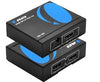
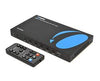
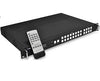
Most traditional AV systems rely on direct connections. HDMI cables run from sources to displays, sometimes passing through a matrix switcher in between. Those switchers come with a fixed number of inputs and outputs, which means the system is effectively “locked” the moment it’s installed.
This setup is still common in conference rooms and fixed display environments, but it doesn’t age well. Adding a new screen often means pulling new cable. Expanding beyond the original port count can require replacing expensive hardware. Physical rack space fills up fast, and changes usually involve downtime. Traditional AV works best when nothing changes. Unfortunately, most environments do.
What Is AV Over IP?
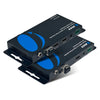
AV over IP takes a different approach. Instead of sending HDMI directly to a display, the signal is converted into data and sent across an Ethernet network. This process uses an AV over IP encoder/decoder pair. The encoder converts HDMI into IP, while the decoder converts it back at the display.
This method is often described as HDMI to IP, and it allows audio and video to move freely across the network. With over IP distribution, routing becomes a configuration task instead of a physical one. OREI’s AV over IP solutions are built around this idea, giving teams a way to manage AV using familiar networking solutions rather than specialized hardware.
Key Limitations of Traditional AV Systems
One of the biggest issues with traditional AV is scale. Matrix switchers have fixed limits. Once you reach them, expansion becomes expensive and disruptive. Cable runs grow longer. Install time increases. Maintenance becomes harder.
Flexibility is another pain point. Moving a display or changing a layout often means rerunning cables. Integrating AV with modern IT systems can also be challenging, especially when monitoring or remote management is required. These limitations become more obvious as organizations adopt higher resolutions and distributed displays.
Advantages of Switching to AV Over IP
AV over IP removes many of those barriers. Instead of replacing a central switcher, systems grow by adding endpoints. Want another display? Add a decoder. Need another source? Add an encoder. This design works well across a full HDMI over IP network, from small installs to large multi-room deployments.
Routing is flexible. Any source can be sent to any display without rewiring. Web-based control makes it possible to manage routing, monitor device status, and update configurations remotely. Centralized control hubs bring everything together in one place.
Costs are easier to control too. Ethernet cabling is simpler to install than long HDMI runs, and changes no longer require physical rework. With support for 4K AV over IP, or HDMI over IP 4K, and 4K IP encoder hardware, AV over IP systems deliver performance without forcing constant hardware upgrades. OREI designs its platforms with these real-world needs in mind.
Real-World Applications Driving the Shift to AV Over IP
Corporate environments are a natural fit. Boardrooms, lobbies, and operations centers benefit from flexible routing and centralized management. Education uses AV over IP to share lectures across buildings or campuses without complex wiring.
Retail and hospitality industries can depend on HDMI over IP extender setups to distribute content across multiple zones. Control rooms and event spaces rely on IP-based systems for reliability, scale, and fast reconfiguration. In each case, AV over IP solves problems that traditional systems struggle to keep up with.
Future-Proofing AV Systems with AV Over IP
AV over IP aligns better with how technology evolves. Higher resolutions, new formats, and changing workflows can be supported through updates rather than full system replacements.
Remote monitoring, browser-based control, and deeper IT integration are becoming standard expectations. OREI continues to build AV over IP solutions that support these trends while remaining practical to deploy and maintain. For organizations planning long-term AV infrastructure, AV over IP offers a way forward without locking systems into rigid designs.
For more tips and insights on AV systems and setup solutions, be sure to visit our blog where we cover a range of related topics to help you get the most out of your AV equipment.