












AV systems rarely stay the same size forever. A company can add meeting rooms, digital signage, or another office floor. What worked for a handful of displays can become difficult to manage as requirements grow.
That is usually when the conversation turns to two common options: an HDMI matrix switch and an AV over IP system. Both distribute content to multiple displays, but they approach growth very differently.
What Is an HDMI Matrix System? Most HDMI matrix setups solve a simple problem: deciding which source appears on which screen.
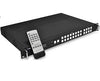
An HDMI matrix, or a video matrix switcher, blends a splitter and a switcher into one, letting you route any source to any screen. A standard HDMI matrix 4x4, for instance, lets you connect four sources to four displays independently.
Conference rooms, retail stores, and churches commonly use this setup. Its central control interface and straightforward installation process make it a reliable choice. OREI HDMI Matrix solutions are built for these deployments.
What Is AV-over-IP? A few displays in one room are easy to manage. But spreading them across locations creates different challenges.
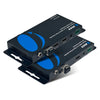
AV over IP distributes AV across standard Ethernet networks using an AV over IP encoder/decoder system. Encoders send source content, while decoders deliver it to displays.
Because the system runs over CAT6 infrastructure, it can scale far beyond the limits of traditional HDMI hardware. OREI ToVi AV over IP solutions are built around this network-based approach.
HDMI Matrix vs AV-over-IP: Core Technology Differences
The biggest difference comes down to how content moves through the system.
An HDMI matrix uses dedicated hardware-based switching with a fixed number of inputs and outputs, while AV over IP uses network-based routing through managed switches, meaning, sources and displays become endpoints on the network, making expansion more flexible.
Simply put, the former prioritizes simplicity. The latter, scalability.
Scalability: Which Solution Grows Better with Your Business?
HDMI matrix systems work well in small-to-medium installations with fixed room layouts and predictable display counts.
But growth eventually creates new requirements.
AV over IP solutions scale through additional network endpoints rather than hardware replacement. Multi-floor offices, campuses, and large digital signage deployments are common examples.
OREI ToVi systems are frequently selected for environments where future expansion is expected.
Installation and Infrastructure Considerations
HDMI matrix systems are generally easier to deploy, providing a direct path from source to display.
AV over IP requires extra planning, but the perks add up as your setup grows. CAT6 wiring simplifies long-distance distribution, reduces cable clutter, and allows PoE-powered endpoints.
Flexibility and Control Features
Fixed display environments favor HDMI matrix systems. Routing is reliable, predictable, and manageable.
AV over IP is better for environments where requirements change. Sources can be routed dynamically to different displays, while video walls, multicast distribution, centralized monitoring, and remote management become easier to implement.
OREI ToVi systems include centralized Web GUI management, giving administrators visibility and control across the entire deployment.
Real-World Example: AV-over-IP in an Emergency Operations Center
The Franklin County Emergency Management Agency needed a way to bring live information from multiple locations into a centralized Emergency Operations Center. After exploring traditional video wall options, the team found that many solutions exceeded their budget.
With the OREI ToVi X4 Series, they expanded the system with additional encoders rather than replacing existing infrastructure, allowing more information sources to be added using the same AV over IP system.
See how the OREI ToVi X4 Series powers the Franklin County Emergency Management Agency in this ToVi Case Study Video.
Cost Comparison: Short-Term vs Long-Term Value
HDMI matrix systems are often the most cost-effective route if you don't plan on expanding.
AV over IP setups typically require a bigger investment.
Long term, AV over IP scales through additional endpoints rather than hardware replacement, helping offset initial infrastructure costs.
Which Solution Is Right for Your Business?
For small offices, retail stores, and single-floor spaces, an HDMI matrix is the ideal way to route your meeting room AV equipment if you don't plan on moving things around.
An AV over IP system is typically suited for growing enterprises, multi-room environments, and multi-building facilities.
Before making a decision, evaluate the number of displays, distance requirements, scalability goals, and IT readiness.
Need Help Designing Your AV System?
Selecting the right commercial AV solutions involves more than choosing hardware.
OREI's Free Design Assistance service helps businesses with network planning, product recommendations, system architecture, and deployment guidance.
Planning a scalable setup? OREI's design specialists can simplify things with tailored system recommendations and expert guidance. Fill out our Free Design Assistance Request Form.